
In this article
- Bespoke Architectural Integration vs. Off-the-Shelf Box Cabinets
- The Structural Integrity of Luxury Material Sourcing
- Bespoke Custom Cabinets vs. Mass-Market Stock Cabinets
- Ergonomic Layouts and the Kitchen Work Triangle
- Evaluating the ROI of Custom Cabinetry in Northern New Jersey
- Frequently Asked Questions (FAQ)
- See more
When embarking on a high-end residential renovation in the Tri-State area, discerning homeowners prioritize projects that harmonize refined aesthetics with long-term property equity. Enlisting a premier luxury custom kitchen cabinets designer in northern new jersey is widely recognized by architects and real estate appraisers as one of the single most valuable investments you can make to elevate your daily routine and maximize home resale value.
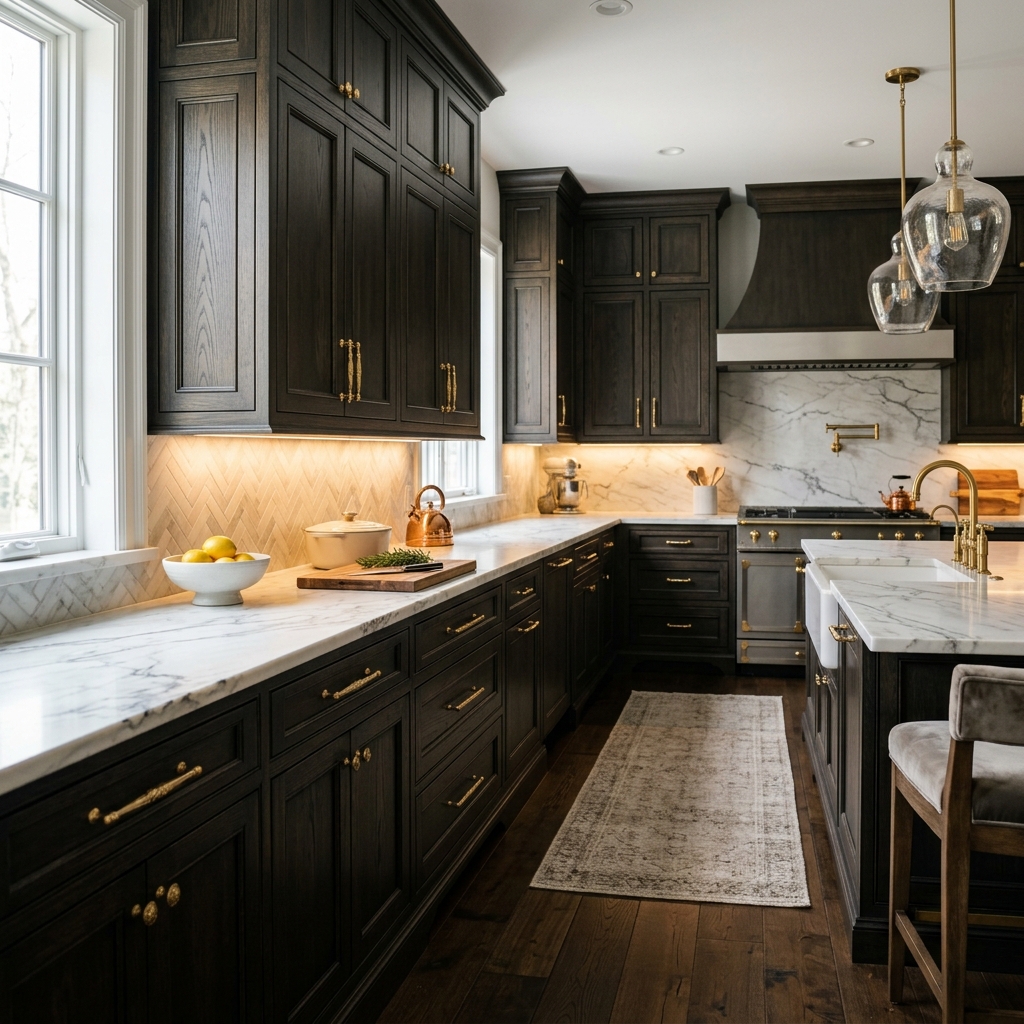
Premium custom cabinetry optimizes every corner of a modern kitchen, delivering unparalleled function and resale value.
Ready to Design Your Luxury Dream Space?
Contact our expert design team in New Jersey today to discuss your project and get a personalized cabinetry quote.
Bespoke Architectural Integration vs. Off-the-Shelf Box Cabinets
In the luxury real estate market of Bergen, Essex, and Hudson counties, the standard for interior millwork is incredibly high. Traditional stock or semi-custom cabinets are manufactured in pre-set three-inch increments. Consequently, during installation, contractors must rely on filler panels to bridge gaps between the cabinet box and the wall. These fillers act as visual interruptions and result in wasted storage space.
Bespoke custom cabinetry is engineered and fabricated to the exact millimeter profile of your kitchen’s architectural layout. This precise manufacturing allows for seamless integration with high-end appliances (such as Sub-Zero refrigeration columns, Wolf ranges, and Cove dishwashers). By eliminating filler panels, custom cabinets maximize vertical and horizontal volume, creating a continuous wall-panel look that enhances structural geometry.
The Structural Integrity of Luxury Material Sourcing
Beyond fit, the longevity of your cabinetry depends entirely on the raw materials and hardware utilized during production. Stock cabinets often feature low-density particleboard cores that absorb moisture from dishwashers and sinks, causing shelves to sag and doors to warp. Luxury cabinetry utilizes high-density, multi-layer furniture-grade plywood or refined MDF cores designed to withstand humidity changes.
Furthermore, luxury cabinetry is equipped with commercial-grade running systems (such as Blum Legrabox or Salice under-mount drawer slides) that support heavy cookware without mechanical fatigue. Fusing premium face materials—such as vertical grain-matched walnut veneers, rift-sawn oak, or nanotechnology matte surfaces—ensures that the cabinets resist scratches, fading, and daily wear over decades of constant family use.
Bespoke Custom Cabinets vs. Mass-Market Stock Cabinets
| Design Parameter | Bespoke Custom Cabinetry | Mass-Market Stock Cabinets |
|---|---|---|
| Sizing and Fit | Millimeter-precision tailored to the space; zero filler panels required. | Fixed 3-inch increments; requires filler strips and creates dead corners. |
| Cabinet Box Core | 3/4-inch multi-layer furniture-grade plywood or dense moisture-resistant MDF. | 1/2-inch low-density particleboard prone to water absorption and sagging. |
| Veneer and Finishes | Sequenced wood grain matching, nano-matte coatings, and custom lacquers. | Thin melamine paper coatings or repetitive wood patterns with seams. |
| Lifespan and Warranty | 30 to 50 years; supported by lifetime manufacturer hardware warranties. | 5 to 10 years; hardware loses alignment and finishes fade or peel. |
Ergonomic Layouts and the Kitchen Work Triangle
Working with a professional cabinetry designer ensures that your kitchen layout is optimized according to ergonomics. The layout centers around the classic Kitchen Work Triangle—creating an efficient path between the refrigerator, sink, and cooking zone. A custom designer goes further, designing specific storage systems that match your cooking habits.
This includes integrating spice drawer organizers, pull-out knife blocks, vertical dividers for sheet pans, and pocket doors that conceal small countertop appliances (such as blenders or espresso machines). It also involves choosing corner drawer cabinets or specialized pull-out carousels (such as LeMans blind corner units) to ensure that hard-to-reach corners become highly functional storage areas.
Evaluating the ROI of Custom Cabinetry in Northern New Jersey
According to regional real estate market reports for northern New Jersey, a high-end kitchen renovation yields one of the highest returns on investment (ROI) of any home improvement project, typically returning between 65% and 80% of installation costs in overall home valuation. Modern buyers in areas like Franklin Lakes, Alpine, and Ridgewood view custom millwork as a benchmark of construction quality.
A home featuring custom custom kitchen cabinets, designer closets, and matching built-ins in the living room stands out in property listings, helping homes sell faster and at premium prices. It signals to prospective buyers that the property has been renovated with care and premium materials.
Work with Bergen County’s Finest Custom Cabinet Makers
We bring modern European aesthetic standards and precision engineering to luxury New Jersey residences. Let’s build together.
Looking for more home interior and custom cabinetry inspiration?
Frequently Asked Questions (FAQ)
See more


