
In this article
- The Aesthetic Value of Light-Stained Wood in NJ Custom Kitchens
- Engineering and Material Sourcing for Luxury Cabinetry
- Cabinetry Comparison: Custom Light-Stained Oak vs. Mass-Market Stained Cabinets
- Designing the Work Triangle and Integrating Smart Features
- Investing in Home Equity and Timeless NJ Style
- Frequently Asked Questions (FAQ)
- See more
When planning a luxury kitchen renovation in the Tri-State area, selecting the right cabinetry finish is crucial for defining the space’s aesthetic and long-term equity. Today, wood designers are seeing a significant shift as luxury kitchen cabinetry nj trends transition from dark, moody tones to light-stained wood cabinets. This design approach highlights the organic beauty of natural wood grain while maintaining a bright, open, and sophisticated environment tailored for Bergen, Essex, and Hudson county residences.
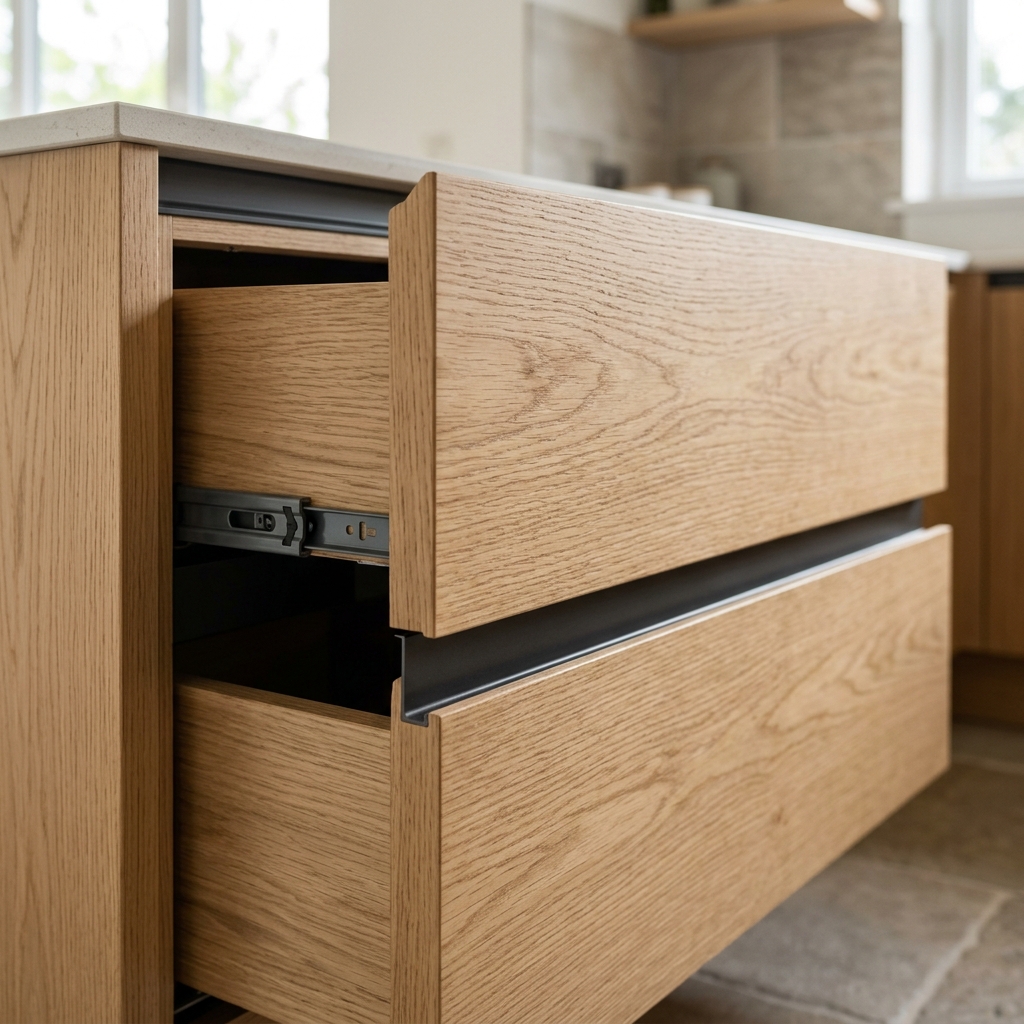
Rift-sawn white oak drawers offer straight grain patterns and modern, handleless geometric precision.
Ready to Design Your Luxury Dream Space?
Contact our expert design team in New Jersey today to discuss your project and get a personalized cabinetry quote.
The Aesthetic Value of Light-Stained Wood in NJ Custom Kitchens
Modern luxury homes require a delicate balance between organic warmth and clean minimalism. For years, white painted shaker cabinets dominated New Jersey kitchens, followed closely by dark charcoal and navy tones. However, high-end homeowners are increasingly seeking textures that connect their indoor spaces with natural landscapes. Light-stained wood cabinetry—featuring white oak, rift-sawn oak, or light walnut—fills this gap perfectly.
By applying a subtle, transparent stain or a matte protective seal, designers preserve the natural cathedral patterns and color variations of the wood fiber. These light tones reflect natural light from large windows, making open-plan kitchens feel larger and more inviting. This style pairs beautifully with bold marble slab countertops, custom integrated plaster range hoods, and brushed brass or bronze hardware, establishing a timeless, sophisticated look that increases home valuation.
Engineering and Material Sourcing for Luxury Cabinetry
In high-end millwork, structural engineering is just as important as surface aesthetics. Mass-market cabinets often use standard particleboard cores that expand and warp when exposed to kitchen humidity. Luxury cabinetry is built on a foundation of **MDF naval** (marine-grade high-density fiberboard or premium plywood cores), which offers excellent stability and moisture resistance near sinks and dishwashers.
To achieve clean lines, parts are cut with millimeter precision using advanced **usinagem CNC** (computer numerical control cutting technology). This precision engineering allows for custom features like handleless J-pull profiles and **frentes flutuantes** (floating panel drawer systems with hidden runners). For the ultimate protection, wood surfaces receive a multi-layer **acabamento laca microtextura** (micro-textured lacquer finish) or specialized matte acrylic topcoats, protecting the cabinets from scratches, stains, and yellowing over decades of daily family use.
Cabinetry Comparison: Custom Light-Stained Oak vs. Mass-Market Stained Cabinets
Understanding the technical differences between high-end custom wood cabinetry and standard options is essential for making an informed remodeling decision. Below is a comparison of design parameters:
| Design Parameter | Custom Light-Stained Cabinetry | Mass-Market Stained Cabinets |
|---|---|---|
| Core Material | Premium plywood or MDF naval, resisting water swell and humidity. | Low-density particleboard vulnerable to water damage and hinge pullout. |
| Veneer matching | Sequenced grain-matching across all doors for a unified look. | Random mismatched wood pieces showing disjointed grain transitions. |
| Precision Cuts | Advanced usinagem CNC for perfect door alignments and custom panels. | Standard table saw cuts with wider tolerances and visible fillers. |
| Topcoat Protection | Anti-yellowing acabamento laca microtextura or water-based polyurethane. | Thin acid-catalyzed lacquer prone to chipping and sun discoloration. |
Designing the Work Triangle and Integrating Smart Features
Working with a professional cabinetry designer ensures your kitchen layout is highly functional. The layout centers around the classic Kitchen Work Triangle, organizing paths between the range, sink, and refrigerator. Custom cabinetry elevates this flow by hiding clutter behind custom wood panels that blend with surrounding walls. Floating panels and handleless profiles create a continuous run of wood veneer, hiding integrated appliances like panel-ready columns and pull-out pantry towers.
Inside the drawers, you can add custom oak dividers, motorized drawer openings, and warm LED strip lighting with sensors. Motorized pocket doors can slide away to reveal coffee stations or baking zones, keeping countertops clean when appliances are not in use.
Investing in Home Equity and Timeless NJ Style
Investing in custom light-stained cabinetry is a smart choice for long-term home equity in Northern New Jersey’s competitive real estate market. According to recent regional market reports, premium custom kitchens return 70% to 85% of their cost during appraisals. Home buyers in high-end areas like Alpine, Franklin Lakes, and Ridgewood value custom millwork and premium materials over temporary design trends.
By choosing natural light-stained finishes on durable marine cores, you create a beautiful space that will stay functional and stylish for decades, ensuring your kitchen remains the heart of your home.
Work with Bergen County’s Finest Custom Cabinet Makers
We bring modern European aesthetic standards and precision engineering to luxury New Jersey residences. Let’s build together.
Looking for more home interior and custom cabinetry inspiration?
Frequently Asked Questions (FAQ)
See more


